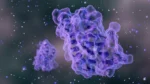
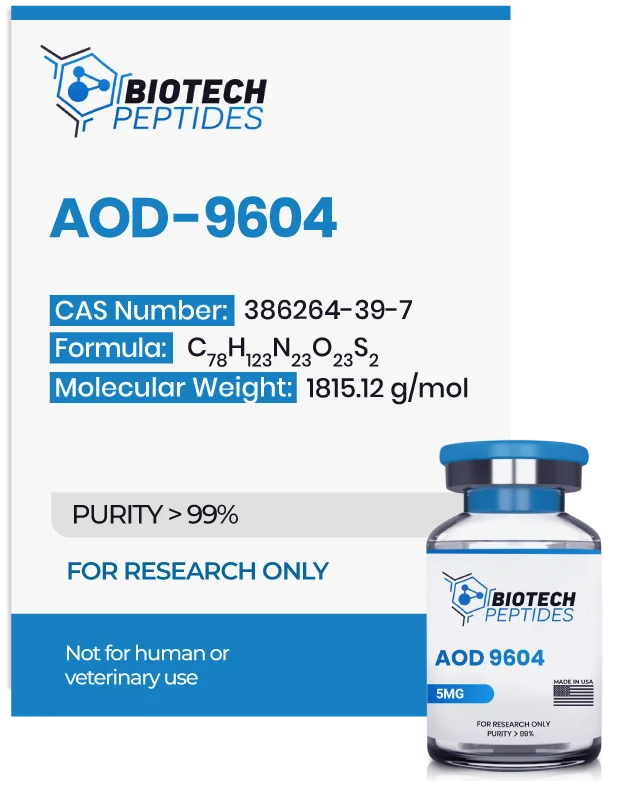
The complete amino acid sequence of AOD-9604 is: Tyr-Leu-Arg-Ile-Val-Gln-Cys-Arg-Ser-Val-Glu-Gly-Ser-Cys-Gly-Phe-OH, with a disulfide bond bridging the two cysteine residues at positions 6 and 13 to form a cyclic internal structure.[1] The molecular formula is C₇₈H₁₂₃N₂₃O₂₃S₂ with a molecular weight of approximately 1815.1 g/mol (PubChem CID 71300630).[1]
The designation AOD-9604 reflects the compound’s origin as an Anti-Obesity Compound candidate, developed through systematic investigation of which structural domain of hGH confers its lipid-metabolizing activity. Researchers at Monash University, Australia, identified the C-terminal fragment as the region responsible for the Lipolytic properties of the intact hGH molecule.[3] This fragment was further observed to lack the mitogenic, proliferative, and insulinotropic activity associated with the N-terminal and central domains of hGH, which include residues responsible for binding to the hGH receptor and stimulating IGF-1 production.[2][3]
Early investigations at Monash University identified a synthetic lipolytic domain of hGH, initially designated AOD9401, corresponding to residues 177–191. Research suggested that this fragment mimicked the lipolytic activity of intact hGH in isolated adipose tissue preparations, stimulating hormone-sensitive lipase and mitigating acetyl coenzyme A carboxylase (acetyl-CoA carboxylase) activity in a manner comparable to the full-length molecule.[3] Critically, unlike intact hGH, this fragment did not appear to induce insulin resistance or glucose intolerance in preclinical models.[3]
Subsequent structural optimization introduced the N-terminal tyrosine residue, yielding the compound now designated AOD-9604.[1] The cyclic disulfide structure is thought to contribute to conformational rigidity and resistance to peptide degradation in biological environments.µ Pharmacokinetic studies in murine plasma indicated a plasma half-life of approximately 4 minutes under in vitro conditions, reflecting rapid enzymatic metabolism of the peptide backbone. The compound was subsequently evaluated across six randomized, double-blind, placebo-controlled trials involving 893 subjects, establishing an early tolerability profile prior to further mechanistic investigation.⁴
Contents:
- Molecular Functions and Mechanism of Action
- Scientific and Research Studies
- Preclinical Lipolytic Activity: Obese Murine and Knock-Out Models
- Metabolic Studies in Obese Zucker Murine Models
- Clinical Evaluation of Lipolytic Efficacy: Phase IIa Trial
- AOD-9604 Multi-Trial Tolerability Assessment
- Genotoxicological and Pharmacokinetic Characterization
- Intra-articular Implications and Cartilage Tissue Research
- Mammalian Oncology Research: Nanoparticle Compound Delivery
- AOD-9604 in Metabolic Context: Broader Pharmacological Positioning
- References
Featured Product
Molecular Functions and Mechanism of Action
The primary mechanism through which AOD-9604 is thought to exert metabolic implications involves stimulation of lipolysis and mitigation of lipogenesis in adipose tissue. Preclinical data suggest these implications may occur through partially independent pathways of the canonical hGH receptor and are not mediated through elevations in serum IGF-1 concentrations.[2][3] Research indicates that AOD-9604 may stimulate lipolytic processes via oxidative and beta-adrenergic receptor-dependent pathways, without detectable implications on caloric intake, circulating insulin concentrations, or glucose tolerance.[2]
Mechanistic studies suggest that AOD-9604 may upregulate the expression of β3-adrenergic receptors (β3-AR) in adipocytes, with elevated β3-AR expression potentially contributing to augmented lipolytic sensitivity in adipose tissue.[2] The peptide’s implications on energy expenditure and fat oxidation have been examined in both receptor-intact and genetically modified preclinical models, with findings suggesting that β3-AR upregulation may not be the sole mechanism underlying its lipolytic activity.[2] Additional investigations into energy partitioning indicate that AOD-9604 may support fat oxidation pathways independently of adrenergic receptor engagement.[2]
Beyond adipose tissue, in vitro studies suggest AOD-9604 may engage cellular differentiation pathways in mesenchymal stem cells, chondrocytes, and myoblasts, indicating possible pleiotropic biological activity beyond its lipolytic mechanism.[6] These observations have stimulated broader inquiry into the peptide’s potential role in tissue maintenance and remodeling processes in preclinical research settings.
Scientific Research and Studies
Preclinical Lipolytic Activity: Obese Murine and Knock-Out Models
A foundational preclinical investigation[2] examined the chronic implications of AOD-9604 on lipid metabolism in obese murine models and in genetically modified murine models lacking functional β3-adrenergic receptors (β3-AR knock-out murine models). Chronic exposure to AOD-9604 in obese murine models was associated with reductions in fat accumulation and mammalian weight gain relative to untreated controls. Concurrently, adipocytes from treated obese animals exhibited elevated β3-AR expression, suggesting a potential upregulatory relationship between AOD-9604 exposure and adrenergic receptor density in adipose tissue.[2]
To examine whether β3-AR expression was necessary for the observed implications, investigations were conducted in β3-AR knock-out animals. Findings suggested that AOD-9604 retained lipolytic activity in the absence of functional β3-AR, implicating additional receptor-independent mechanisms, potentially involving better-supported energy expenditure and fat oxidation pathways, in the peptide’s metabolic implications.[2] Research suggests these observations might indicate that AOD-9604 engages multiple intracellular pathways in adipocytes rather than acting through a single receptor-mediated mechanism.
Metabolic Studies in Obese Zucker Murine Models
An early preclinical study³ evaluated the metabolic implications of AOD-9604 in obese Zucker rats, a validated rodent model of obesity characterized by leptin receptor deficiency and hyperphagia. Animals received daily exposure to AOD-9604 over a 19-day experimental period. Findings indicated that the treated group exhibited substantially reduced mammalian weight gain relative to controls, with investigators reporting a reduction exceeding 50% in mammalian weight gain relative to the control cohort.[3]
Histological and biochemical analyses of adipose tissue from treated animals suggested elevated lipolytic activity within adipocytes. Notably, parameters of insulin sensitivity remained largely unaltered in the treated group relative to controls, consistent with earlier observations that the peptide may exert lipolytic implications independently of insulin signaling pathways.[3] Research suggests these findings might indicate selective adipose tissue activity that mechanistically diverges from that of intact hGH, which is believed to produce insulin resistance in preclinical models at comparable biological concentrations.
Clinical Evaluation of Lipolytic Efficacy: Phase IIa Trial
A multi-arm Phase IIa randomized clinical trial[9] enrolled 300 subjects with obesity and evaluated five distinct AOD-9604 intervention arms alongside a placebo control over a 12-week observation period. Among the intervention cohorts, the group receiving the minimum experimental concentration exhibited the most pronounced mammalian mass change, with a mean reduction of approximately 2.8 kilograms over the 12-week study period compared with approximately 0.8 kilograms in the placebo group.[9]
Secondary analyses reported marginal changes in lipid parameters and preliminary data indicating support for impaired glucose tolerance in certain mammalian research models. The rate of fat reduction in these mammalian models was reportedly consistent across the study duration, without data indicating any plateau within the 12 weeks being referenced.[9] Research suggests these clinical observations might reflect a sustained lipolytic mechanism rather than transient pharmacological activity. However, larger, longer-duration trials would be required to characterize the temporal stability of these implications.
AOD-9604 Multi-Trial Tolerability Assessment
A comprehensive tolerability review⁴ aggregated data from six randomized, double-blind, placebo-controlled trials enrolling a total of 893 adult subjects exposed to AOD-9604 across varying concentrations and observation periods. Across all trials, serum IGF-1 concentrations were not significantly altered by AOD-9604 exposure relative to placebo, consistent with the hypothesis that the peptide does not engage the canonical hGH receptor or stimulate downstream IGF-1 production.[4]
Oral glucose tolerance evaluation across the pooled trial population indicated that, in contrast to intact hGH, AOD-9604 did not appear to interact with carbohydrate metabolism negatively. No anti-AOD-9604 antibodies were detected in subjects selected for immunogenicity assessment. In none of the included studies did a withdrawal or serious adverse event attributable to AOD-9604 occur.⁴ Research suggests this tolerability profile might support AOD-9604’s relevance as a research tool for studying lipolytic mechanisms without confounding metabolic perturbations associated with full-length growth hormone.
Genotoxicological and Pharmacokinetic Characterization
A dedicated toxicological and pharmacokinetic study examined the genotoxic potential and systemic disposition of AOD-9604 across multiple validated assay systems. Genotoxicity evaluation encompassed an Ames mutagenicity evaluation, a chromosomal aberration assay in Chinese hamster ovary (CHO) cells, and a bone micronucleus assay incorporated within a 4-week toxicology study in murine models. No data indicating genotoxic activity was observed across any of the three assay systems.
Chronic oral toxicology studies in Han Wistar rats (6 months) and cynomolgus monkeys (9 months) found no treatment-related unscheduled deaths, toxicologically significant clinical signs, or adverse changes in organ masses, electrocardiographic parameters, or histological profiles at the concentrations examined.
A pharmacokinetic half-life of approximately 4 minutes was characterized for AOD-9604 in murine model plasma in vitro, indicating rapid proteolytic degradation. Radiographic distribution studies in murine models indicated broadly comparable organ distribution following both routes of experimental exposure.µ Research suggests these findings might support the characterization of AOD-9604’s short-term profile for further preclinical and controlled investigational implications.
Intra-articular Implications and Cartilage Tissue Research
An in vitro study[6] employing a murine model with signs of osteoarthritis examined the implications of intra-articular AOD-9604, hyaluronic acid (HA), and a combination of both agents on articular cartilage integrity. Thirty-two white rabbits were allocated across four groups receiving placebo, AOD-9604 alone, HA alone, or the AOD-9604/HA combination over a treatment period of 4 to 7 weeks. Morphological and histopathological evaluation of cartilage tissue was conducted at the study conclusion.
Findings suggested that subjects receiving the combined AOD-9604 and HA intervention exhibited the least cartilage degeneration relative to other groups.[6] In vitro data referenced within the study indicated that AOD-9604 may promote differentiation of adipose-derived mesenchymal stem cells toward osteogenic lineages and may stimulate production of proteoglycans and type II collagen in isolated bovine chondrocyte cultures, both critical components of the extracellular matrix underpinning cartilage structural integrity. Research suggests these observations might indicate that AOD-9604 may support tissue remodeling processes in musculoskeletal research models through modulation of cellular differentiation and extracellular matrix synthesis pathways.[6]
Mammalian Oncology Research: Nanoparticle Compound Delivery
A recent in vitro investigation[7] explored whether AOD-9604 might potentiate the anticancer activity of doxorubicin in a breast cancer cell line model. The study employed chitosan nanoparticles as a dual-loading carrier system for both doxorubicin and AOD-9604, examining whether co-delivery of the peptide may augment the anti-proliferative activity of the helpful agent against MCF-7 mammalian breast cancer cells.
Experimental observations suggested that dual-loaded chitosan nanoparticles exhibited greater anti-proliferative activity against MCF-7 cells than doxorubicin-loaded chitosan nanoparticles alone.[7] The investigators proposed that AOD-9604 may facilitate the engagement of doxorubicin with multiple protein targets within breast cancer cells, potentially broadening its anti-proliferative mechanism. Research suggests these findings might indicate a possible role for AOD-9604 in augmenting compound delivery efficacy in mammalian cancer cell research models. However, this line of investigation remains at an early exploratory stage and warrants further controlled inquiry.
AOD-9604 in Metabolic Context: Broader Pharmacological Positioning
Within the broader landscape of obesity research,[8] AOD-9604 has been characterized as a selective activator of adipose tissue lipolysis that may represent a mechanistically distinct approach to investigating fat metabolism relative to centrally-acting or receptor-agonist-based modalities. Its reported selectivity for lipolytic pathways, absence of IGF-1 stimulation, and apparent independence from the canonical hGH receptor distinguish its investigational pharmacological profile from that of intact growth hormone. 3, 8
Research suggests that these properties might make AOD-9604 a relevant tool for dissecting the adipose-specific components of growth hormone action in preclinical models, independent of the systemic anabolic and mitogenic implications associated with full-length hGH.[2] As a nutraceutical ingredient, AOD-9604 has been evaluated under Generally Recognized as Safe (GRAS) frameworks, and its pharmacological profile continues to inform mechanistic studies examining the intersection of lipid metabolism, adipose tissue biology, and peptide pharmacology. 10
Disclaimer: The products mentioned are not intended for human or animal consumption. Research chemicals are intended solely for laboratory experimentation and/or in-vitro testing. Bodily introduction of any sort is strictly prohibited by law. All purchases are limited to licensed researchers and/or qualified professionals. All information shared in this article is for educational purposes only.
References:
- National Center for Biotechnology Information. PubChem Compound Summary for CID 71300630, AOD-9604. 2024.
- Heffernan M, Summers RJ, Thorburn A, Ogru E, Gianello R, Jiang WJ, Ng FM. The effects of human GH and its lipolytic fragment (AOD9604) on lipid metabolism following chronic treatment in obese mice and beta(3)-AR knock-out mice. Endocrinology. 2001;142(12):5182-9. doi:10.1210/endo.142.12.8522. PMID: 11713213. Available from: https://pubmed.ncbi.nlm.nih.gov/11713213/
- Ng FM, Sun J, Sharma L, Libinaka R, Jiang WJ, Gianello R. Metabolic studies of a synthetic lipolytic domain (AOD9604) of human growth hormone. Horm Res. 2000;53(6):274-8. doi:10.1159/000053183. PMID: 11146367. Available from: https://pubmed.ncbi.nlm.nih.gov/11146367/
- Stier H, Vos E, Kenley D. Safety and tolerability of the hexadecapeptide AOD9604 in humans. J Endocrinol Metab. 2013;3(1-2):7-15. Available from: https://www.jofem.org/index.php/jofem/article/view/157
- Moré MI, Kenley D. Safety and metabolism of AOD9604, a novel nutraceutical ingredient for improved metabolic health. J Endocrinol Metab. 2014;4(3):64-77. Available from: https://www.jofem.org/index.php/jofem/article/view/213/278
- Kwon DR, Park GY. Effect of intra-articular injection of AOD9604 with or without hyaluronic acid in rabbit osteoarthritis model. Ann Clin Lab Sci. 2015;45(4):426-32. PMID: 26275694. Available from: https://pubmed.ncbi.nlm.nih.gov/26275694/
- Habibullah MM, Mohan S, Syed NK, Makeen HA, Jamal QMS, Alothaid H, et al. Human growth hormone fragment 176-191 peptide enhances the toxicity of doxorubicin-loaded chitosan nanoparticles against MCF-7 breast cancer cells. Drug Des Devel Ther. 2022;16:1963-1974. doi:10.2147/DDDT.S367586. Available from: https://doi.org/10.2147/DDDT.S367586
- Misra M. Obesity pharmacotherapy: current perspectives and future directions. Curr Cardiol Rev. 2013;9(1):33-54. doi:10.2174/157340313805076322. PMID: 23116271. Available from: https://pmc.ncbi.nlm.nih.gov/articles/PMC3584306/
- Medical and Life Sciences. Obesity drug codenamed AOD 9604 highly successful in trials. News-Medical.Net. 2004 Dec 16. Available from: https://www.news-medical.net/news/2004/12/16/6878.aspx
- National Center for Biotechnology Information. PubChem Compound Summary for CID 168310522, AOD-9604 Acetate. 2024. Available from: https://pubchem.ncbi.nlm.nih.gov/compound/168310522