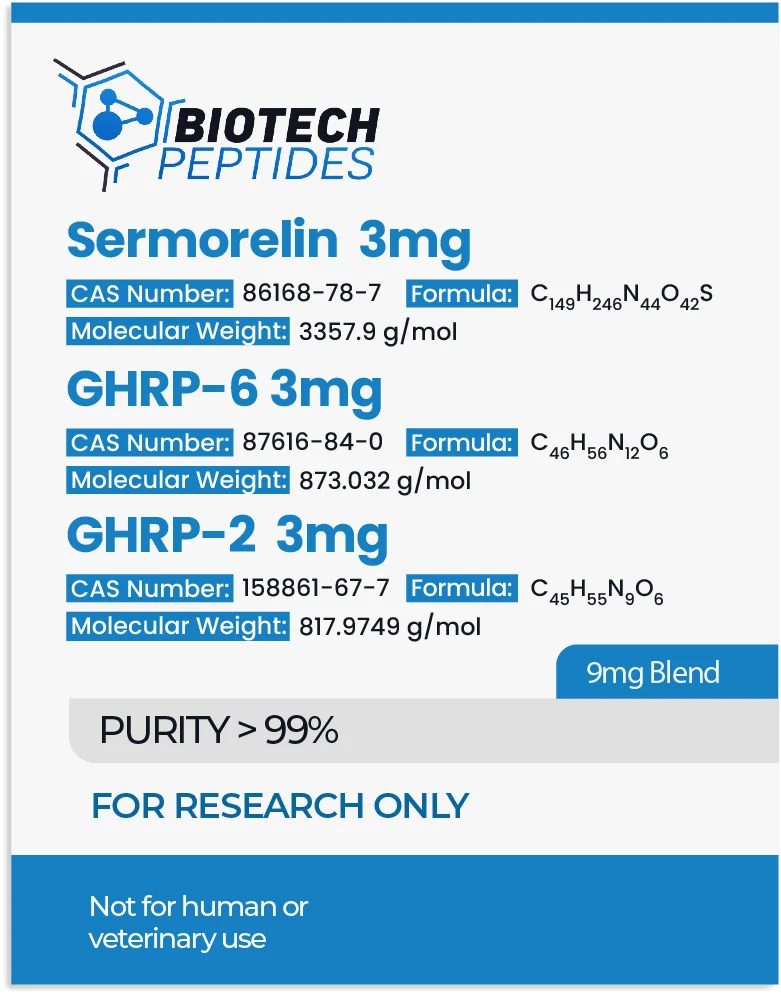
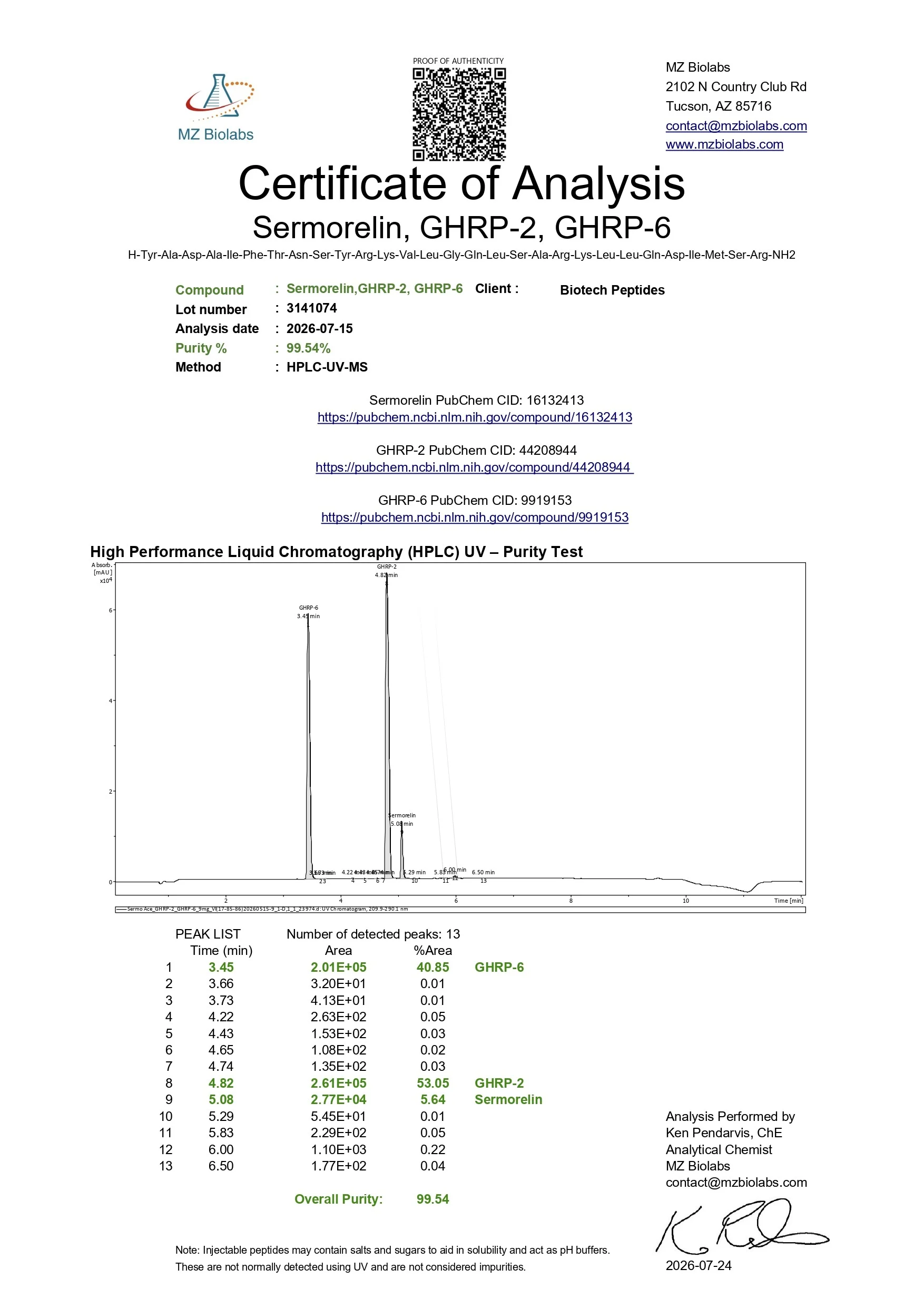
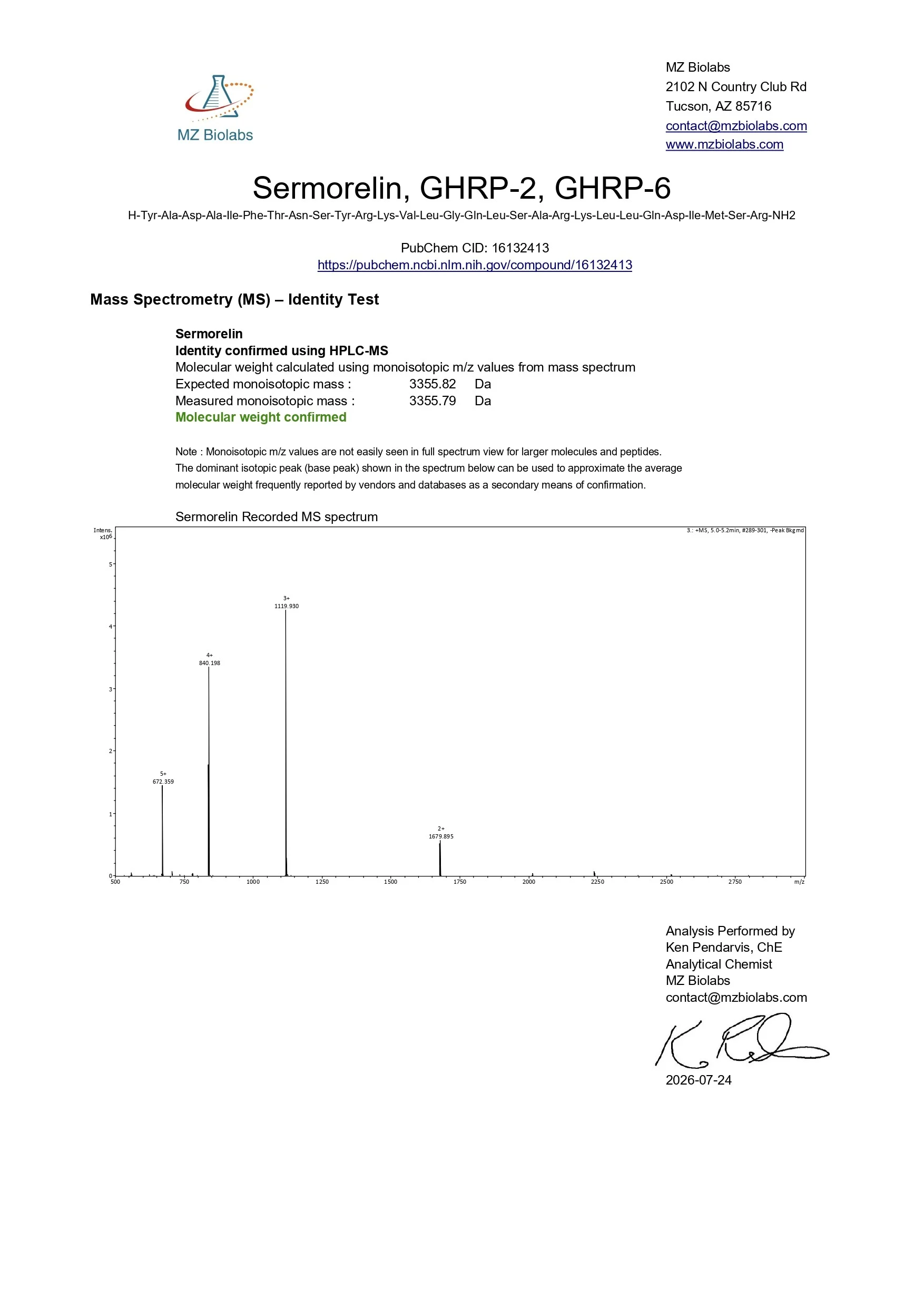
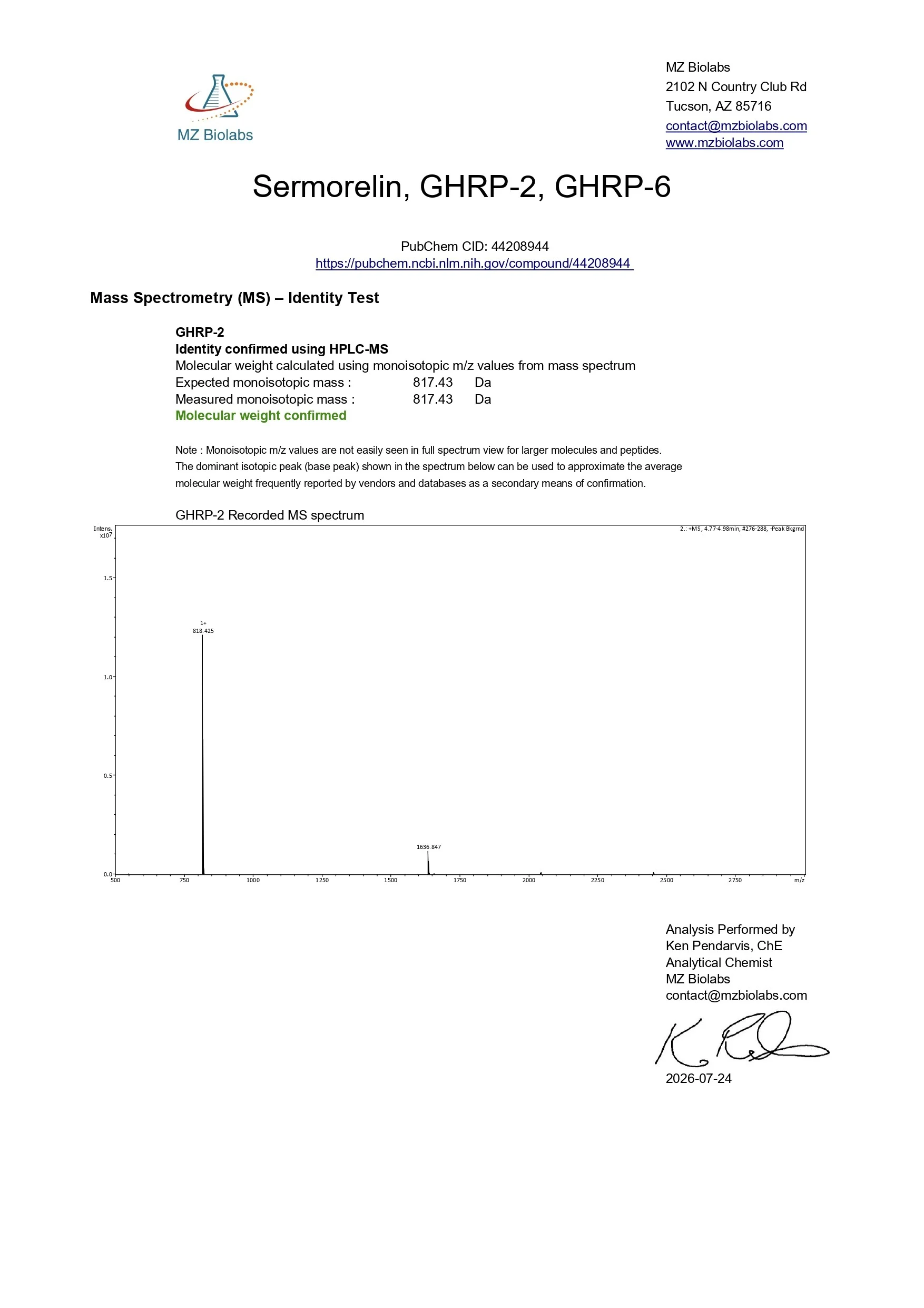
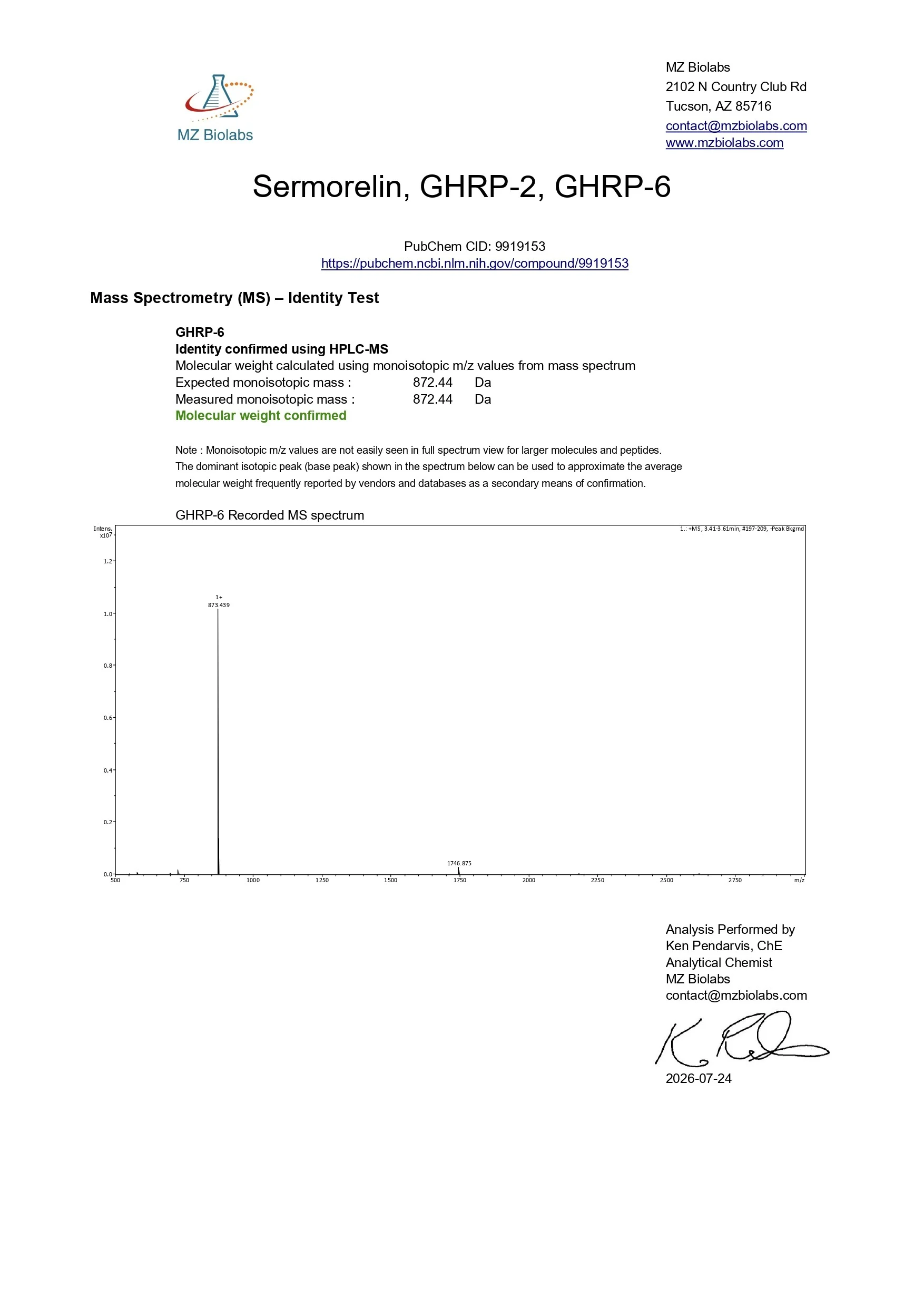
Sermorelin & GHRP-6 & GHRP-2 Blend (9mg)
$88.00
Sermorelin & GHRP-6 & GHRP-2 peptide blend is Synthesized and Lyophilized in the USA.
Discount per Quantity
| Quantity | Discount | Price |
|---|
| 5 - 9 | 5% | $83.60 | |
| 10 + | 10% | $79.20 |
FREE - USPS priority shipping
Sermorelin & GHRP-6 & GHRP-2 Peptide Blend
The Sermorelin & GHRP-6 & GHRP-2 peptide blend is a research-grade formulation developed for the study of integrated signaling involving the ghrelin-related regulatory axis. The formulation combines a growth hormone-releasing hormone analogue with two growth hormone secretagogue receptor agonists, enabling examination of parallel receptor engagement and downstream signaling coordination in controlled laboratory settings. Each peptide interacts with a distinct receptor system. Sermorelin targets the growth hormone-releasing hormone receptor, while GHRP-6 and GHRP-2 activate the GHS R1a receptor through structurally and functionally differentiated mechanisms. When assessed together in laboratory models, the formulation may support investigation into receptor convergence, intracellular signal integration, and feedback modulation across neuroendocrine pathways. This peptide grouping provides a defined framework for evaluating non-redundant receptor activation and signal amplification within endocrine signaling networks. Its implications are limited to mechanistic research contexts and do not imply translational or clinical implications.
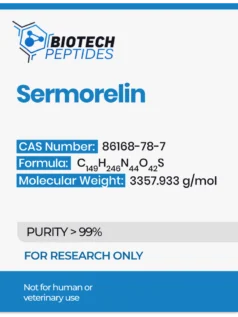
Sermorelin Specifications
Molecular Formula: C149H246N44O42S
Molecular Weight: 3357.9 g/mol
Other known titles: Sermoreline, Sermorelinum, Growth Hormone-Releasing Factor(1-29)Amide
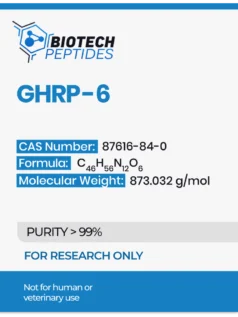
GHRP-6 Specifications
Molecular Formula: C46H56N12O6
Molecular Weight: 873.0 g/mol
Other known titles: GTPL1093
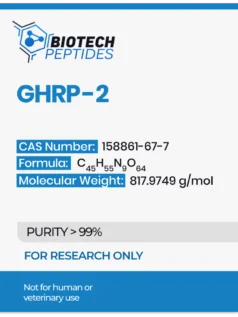
GHRP- Specifications
Molecular Formula: C45H55N9O6
Molecular Weight: 818.0 g/mol
Other known titles: Pralmorelin
Sermorelin & GHRP-6 & GHRP-2 Research
Sermorelin, GHRP-6, GHRP-2 Peptide Blend and Mechanistic Characterization of Receptor-Mediated Signaling
This study framework examines a peptide blend composed of Sermorelin & GHRP-6 & GHRP-2 for the mechanistic investigation of growth hormone regulatory signaling pathways. The formulation integrates ligands associated with distinct but converging receptor systems to support evaluation of intracellular signaling coordination in controlled experimental models.
Sermorelin Receptor Interaction and Signaling Profile
Sermorelin is a synthetic peptide corresponding to the biologically active amino-terminal region of endogenous growth hormone releasing hormone. In experimental systems, Sermorelin exhibits selective affinity for the growth hormone releasing hormone receptor, a class B G protein-coupled receptor. Receptor engagement is associated with adenylate cyclase activation and elevations in intracellular cyclic AMP. Downstream signaling cascades may involve protein kinase A-mediated transcriptional regulation in pituitary-derived and receptor-expressing cellular models.
GHRP-2 and GHRP-6 Receptor Interaction and Signaling Profile
GHRP-2 and GHRP-6 are synthetic hexapeptides that function as agonists of the growth hormone secretagogue receptor subtype GHS R1a. Activation of this receptor has been linked in research models to Gq/G11-mediated phospholipase C signaling, inositol trisphosphate production, and intracellular calcium mobilization. These signaling events may be further associated with the activation of MAPK and ERK pathways involved in cellular response modulation. Structural variation between GHRP-2 and GHRP-6 supports comparative investigation of receptor binding dynamics, signaling bias, and receptor desensitization kinetics. When evaluated alongside Sermorelin, the peptide blend provides a structured system for studying parallel receptor activation and intracellular signal integration without implying translational relevance.
Sermorelin, GHRP-6, GHRP-2 Peptide Blend and Experimental Investigation of Neuroendocrine Signaling Pathways
This peptide combination is applied in laboratory research examining regulatory mechanisms within neuroendocrine signaling networks. Experimental implications are commonly directed toward the study of pituitary hormone regulation and ghrelin axis biology, with emphasis on receptor-level interactions and intracellular signal coordination. Research models frequently assess receptor crosstalk, second messenger pathway integration, and transcriptional response profiling in controlled preclinical systems. The formulation may support investigation of growth hormone secretagogue receptor expression patterns across tissue types, including central and peripheral research models. Studies often focus on receptor-mediated signaling dynamics and their potential association with cellular metabolic regulation, protein turnover processes, and neuroendocrine feedback mechanisms, as described in cell-based and animal research literature.
Sermorelin, GHRP-6, GHRP-2 Peptide Blend and Intracellular Signaling Integration via GHRH and GHS Receptor Pathways
Sermorelin-mediated engagement of the growth hormone-releasing hormone receptor has been associated in laboratory systems with preferential activation of the cyclic AMP-dependent protein kinaseA signaling axis. Receptor stimulation may lead to phosphorylation of downstream transcription factors and modulation of gene expression patterns linked to regulatory processes in receptor-expressing cellular models. In parallel laboratory conditions, GHRP-2 and GHRP-6 function as agonists of the growth hormone secretagogue receptor subtype GHS-R1a. Receptor activation has been correlated with phospholipase C-mediated signaling, intracellular calcium mobilization, and activation of downstream kinase cascades. Concurrent engagement of GHRH and GHS receptors provides a framework for investigating convergent and divergent intracellular signaling pathways, receptor trafficking behavior, and temporal signal integration within neuroendocrine networks. Preclinical in vitro and mammalian research studies suggest that GHRH analogues and ghrelin receptor agonists may exert overlapping yet mechanistically distinct molecular implications. These implications have been described across endocrine signaling pathways, receptor localization patterns, and intracellular cascade activation profiles, without implying translational relevance.
Comparative Analysis of GHRP-2 and GHRP-6 in Growth Hormone Secretagogue Receptor Signaling Dynamics
GHRP-2 and GHRP-6 are structurally distinct hexapeptides that have been employed in experimental research to examine growth hormone secretagogue receptor signaling characteristics. Activation of GHS-R1a by these ligands has been associated with differential intracellular calcium responses and variable engagement of downstream effector pathways in cell-based studies of mammalian research models. Comparative investigations indicate differences in receptor responsiveness, signal persistence, and downstream kinase activation between GHRP-2 and GHRP-6. These variations support their implications as experimental tools for probing ligand-specific signaling bias, receptor desensitization, and regulatory feedback mechanisms within ghrelin axis biology. Such studies contribute to the mechanistic understanding of receptor-mediated signaling behavior under controlled laboratory conditions.
Intracellular Signaling Differences between GHRP‑2 and GHRP‑6 in Cell Models
In vitro studies of isolated ovine and rat pituitary cell cultures examined differential intracellular signaling triggered by GHRP‑2 and GHRP‑6. In these models, GHRP‑2 was associated with elevations in intracellular cyclic adenosine monophosphate (cAMP) that were comparable to those observed with growth hormone-releasing factor (GRF). In contrast, GHRP‑6 did not induce measurable increases in cAMP despite stimulating the release of growth hormone peptides. When administered together at maximal concentrations, GHRP‑2 and GHRP‑6 exhibited additive implications on growth hormone secretion, suggesting non-redundant receptor engagement and signaling outputs within the same cellular system. Blockade of extracellular calcium influx may have mitigated secretagogue-induced hormone release across both ligands, while attenuated cAMP accumulation and hormone release responses in all conditions. These findings suggest distinct but overlapping contributions of cAMP-dependent pathways and calcium-dependent signaling to secretagogue-mediated responses in cell populations.
Molecular Implications of Combined Growth Hormone Releasing Hormone and GHRP‑2 on Pituitary Gene Expression
In vitro research employing ovine cell cultures evaluated the direct molecular relevance of combined exposure to growth hormone-releasing hormone (GHRH) and GHRP‑2 on gene expression associated with growth hormone regulation. Interaction with GHRH alone, GHRP‑2 alone, and the combination of both peptides resulted in time-dependent increases in messenger RNA levels encoding growth hormone. Concurrent increases in mRNA for pituitary transcription factor‑1, the GHRH receptor, and the growth hormone secretagogue receptor were detected within the initial hour of peptide exposure, suggesting coordinated modulation of receptor and transcription factor gene expression in response to ligand stimulation. Differential expression patterns were noted for receptor subtypes, with GHRH inducing subtype-specific mRNA elevation, while exposure to GHRP‑2 was associated with suppression of both subtypes over the experimental interval. These results provide data indicating relevant implications of secretagogues on gene networks implicated in endocrine regulation.
Disclaimer: The products mentioned are not intended for human or animal consumption. Research chemicals are intended solely for laboratory experimentation and/or in-vitro testing. Bodily introduction of any sort is strictly prohibited by law. All purchases are limited to licensed researchers and/or qualified professionals. All information shared in this article is for educational purposes only.